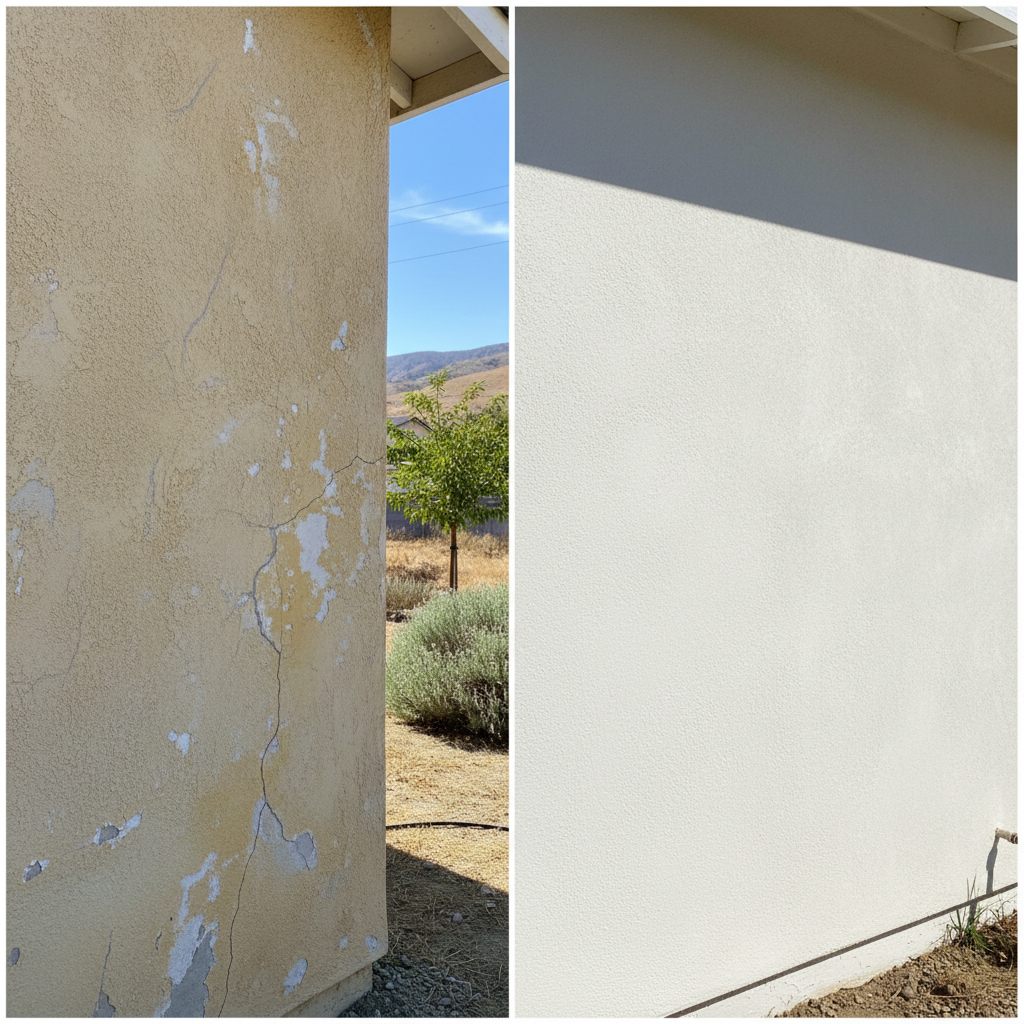
Alright, let's talk stucco. If you're looking at putting new stucco on your house or maybe doing a big repair, you've probably heard a couple of terms thrown around: 'traditional stucco' and 'EIFS.' People often get these two mixed up or don't really understand the differences. As someone who's been working with stucco in Murrieta for years, I can tell you they're definitely not the same thing, and choosing the right one for your home is a pretty big deal.
What's Traditional Stucco All About?
When I say 'traditional stucco,' I'm talking about good old cement-based stucco. This is what you see on most homes around here, especially the older ones in neighborhoods like Bear Creek or even the newer builds that want that classic look. It's a mix of cement, sand, lime, and water, applied in multiple layers over a lath (usually metal mesh) and a weather-resistant barrier.
Here's the rundown on traditional:
- Durability: This stuff is tough. It's basically a hard, rigid shell that can take a beating from the sun, wind, and even minor impacts. It's not going to dent easily.
- Breathability: Traditional stucco breathes. That means moisture can get out if it gets in, which is a huge plus in our climate. You don't want water trapped behind your walls, especially with our occasional heavy rains followed by intense heat.
- Cost: Generally, traditional stucco is less expensive upfront than EIFS. The materials are common, and while it's labor-intensive, it's a well-understood process for most stucco crews.
- Maintenance: It's pretty low maintenance. You might need to wash it periodically, and eventually, after many years, you might see some hairline cracks, but those are usually easy to patch and repaint.
- Appearance: You get that classic, hard, masonry look. It can be textured in a ton of ways, from smooth finishes to rougher, sandier textures.
Now, Let's Look at EIFS
EIFS stands for Exterior Insulation and Finish System. This is a very different animal. Think of it as a multi-layered system that starts with an insulation board (usually expanded polystyrene, like Styrofoam) attached to your wall sheathing. Over that, there's a base coat with a fiberglass mesh embedded in it, and then a finish coat that looks like stucco.
Here's what you need to know about EIFS:
- Insulation: This is its big selling point. EIFS provides excellent insulation, which can mean lower energy bills for heating and cooling. In our hot Murrieta summers, that's a definite advantage.
- Flexibility: Because of the foam board and flexible finish coats, EIFS is more flexible than traditional stucco. This means it's less prone to cracking from minor building movement.
- Appearance: It can mimic traditional stucco very well, and you can get a huge range of colors and textures. It often looks a bit smoother and more uniform than traditional stucco.
- Cost: Typically, EIFS is more expensive to install than traditional stucco. The materials are specialized, and the installation requires specific training and expertise.
- Durability (and a big 'but'): While flexible, EIFS can be more susceptible to impact damage. A hard hit can dent or puncture the foam layer underneath. The bigger concern, though, has historically been moisture. If water gets behind the EIFS system and can't escape (because it's not designed to breathe like traditional stucco), it can lead to serious problems like rot and mold. Modern EIFS systems have improved drainage, but proper installation and flashing are absolutely critical.
My Take for Murrieta Homeowners
Look, both systems have their place. But for most homes here in Murrieta, especially with our intense sun and the occasional heavy rain we get, I almost always lean towards traditional stucco.
Why? First, the breathability. Our climate demands a wall system that can handle moisture without trapping it. Trapped moisture is a nightmare, and fixing it is expensive. Traditional stucco, when installed correctly with a good weather barrier, manages moisture much better. You don't want to deal with a system that has a higher risk of hidden water damage, especially with the way our soil can shift a bit around here.
Second, the durability for the cost. Traditional stucco is incredibly robust for what you pay. You get a solid, long-lasting exterior that's proven itself for decades. While EIFS offers insulation benefits, the added cost and the potential for moisture issues if not perfectly installed often outweigh those benefits for residential applications here.
If you're building a highly energy-efficient custom home and have a contractor who is an absolute expert in modern EIFS drainage systems, then maybe it's worth considering. But for the vast majority of homeowners just looking for a reliable, attractive, and durable exterior, traditional stucco is the way to go. It's a tried-and-true system that Murrieta Stucco & Plastering has been installing and repairing for years, and we know it holds up.
Don't get me wrong, EIFS isn't 'bad,' but it's a more complex system with a higher margin for error if not done by someone who truly knows what they're doing. For peace of mind and a classic look that lasts, I'd stick with traditional stucco every time.